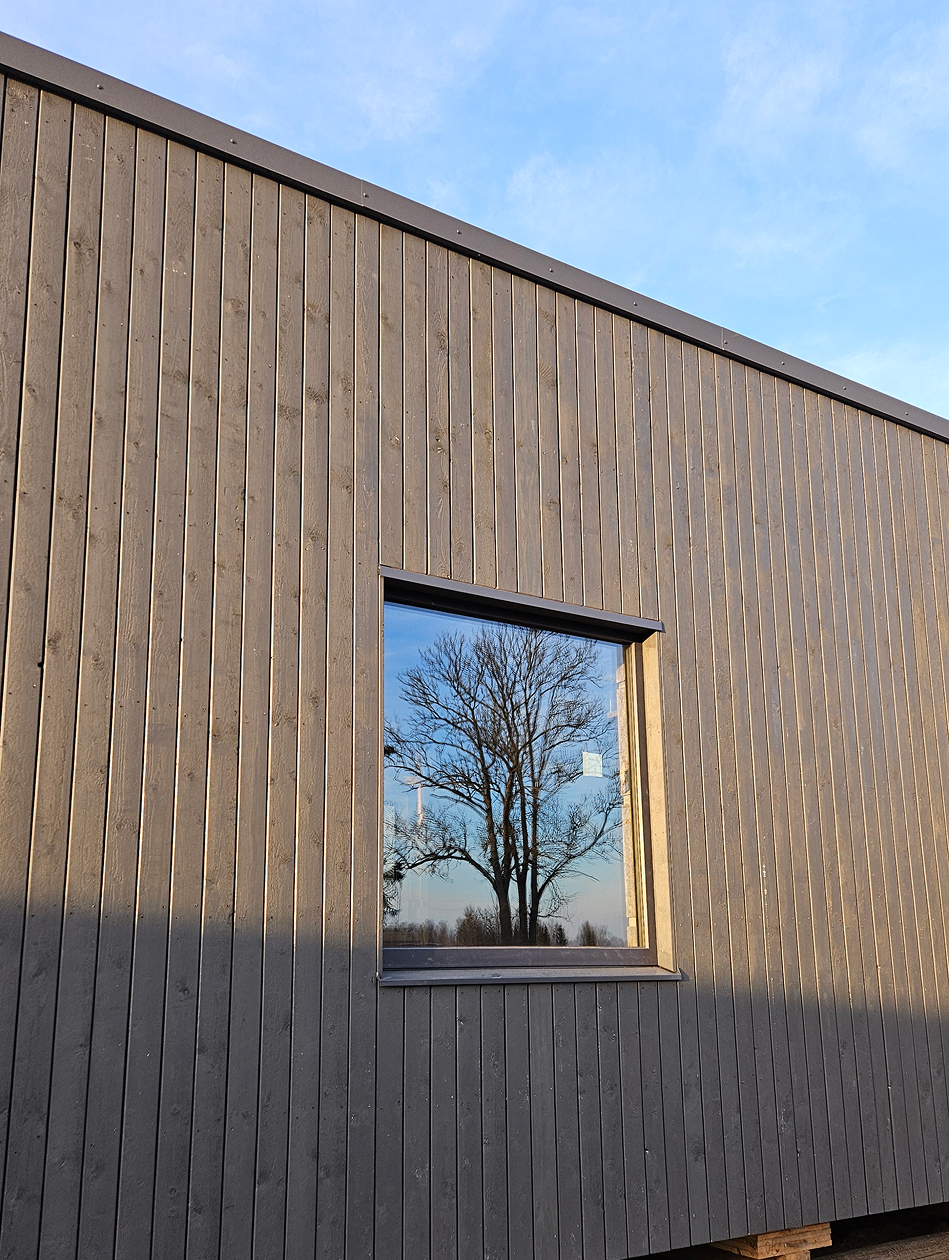
Together, Mobi Lab and Vecmeiri set out to design a standard smart home package for tiny houses that brings together hardware, a cloud platform and a mobile app, along with a building process any factory can follow. The goal is to make smart homes simple and affordable, so buyers no longer have to choose between costly custom systems and a mix of separate gadgets.
Vecmeiri is a tiny house builder in Latvia. They build compact 15–40 m² homes for year-round living using Northern European timber-frame methods, and every house comes with built-in furniture and storage.
Today, a tiny house buyer who wants a smart home has two choices. They can hire a consultant for a custom system, which prices out most of the market. Or they can retrofit devices one by one, ending up with several apps, no shared logic, and local builders left out of the value chain.
For the builder, the problem is just as real: every request needs custom consulting and pricing, timber framing has no planned space for smart wiring, cables risk puncturing the vapour barrier, and the digital plans do not translate into steps a factory electrician could follow.
Each company brought its own expertise to the table. Vecmeiri contributed its expertise in building tiny houses, along with demo house sketches, space limits for the electrical cabinet and the house's insulation boundaries. Mobi Lab brought its expertise in software, user experience and cloud technology. With a shared plan in place, Vecmeiri started building the frame of the demo house.
We interviewed smart tiny house users to learn what they actually value and what features were used the most or what would fit seamlessly into their daily routines. They wanted physical switches for daily tasks like lighting. They valued seeing their energy use, checking on the house from afar. Above all, the system had to be reliable, with a manual backup in case of failure. Reliability was considered more important than price.
After evaluating several smart home stacks, we chose the decentralised, industrial-grade KNX standard with Home Assistant on top. This gave us an offline-first, hybrid-edge architecture where critical functions run locally inside the house, while the cloud adds remote access and monitoring.
To bring the digital plan onto the factory floor, we co-created an interactive digital wiring guide. Vecmeiri's electricians used it to route conduits, sensor nodes and KNX bus lines through the timber frame while the demo house walls were still open.
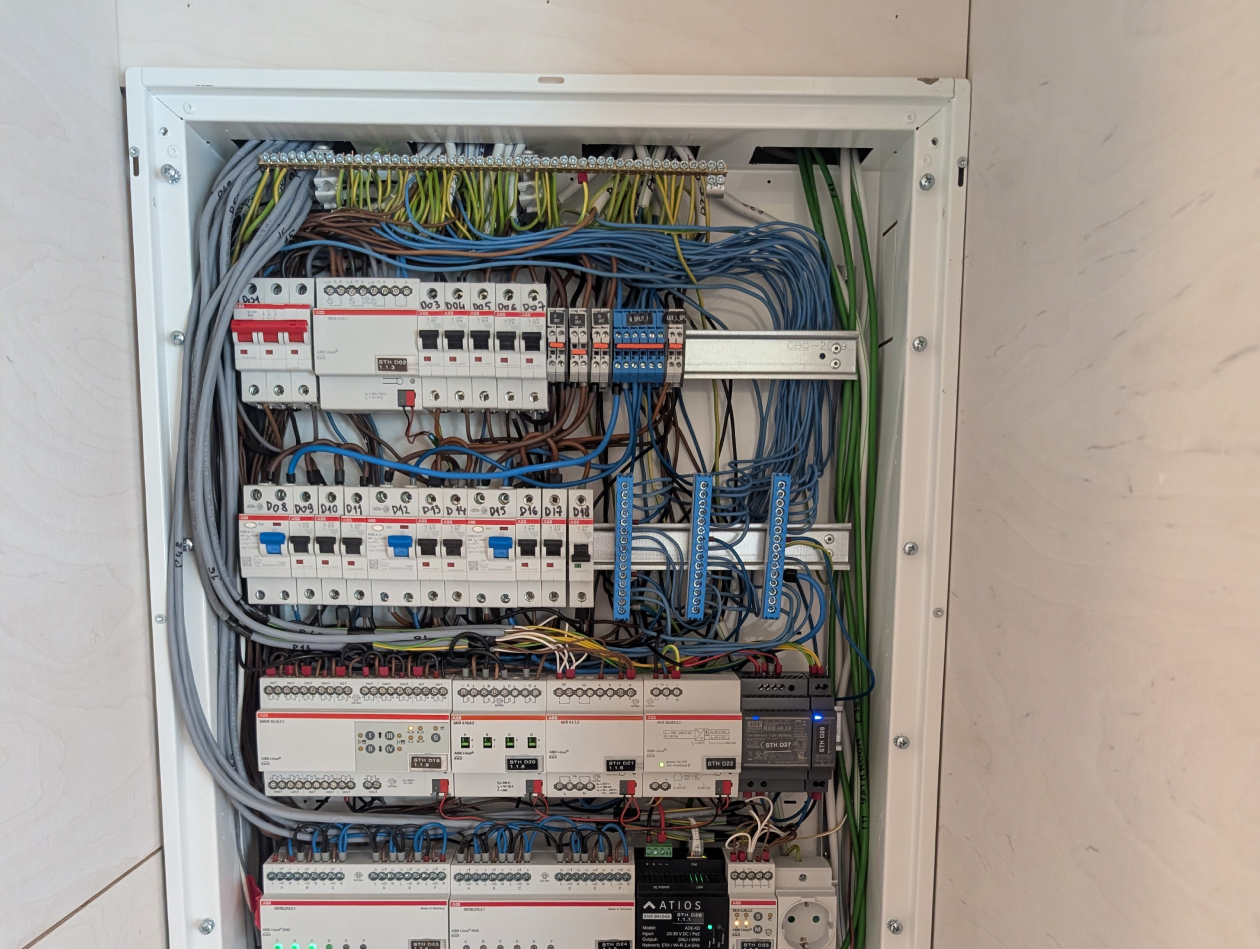
In parallel, Mobi Lab built a hardware and software lab — a 1:1 copy of the house's central cabinet, wired on an industrial pegboard. Every KNX device was pre-programmed and tested there, together with the VPN, the cloud and the mobile app, before being shipped to Latvia ready to switch on.
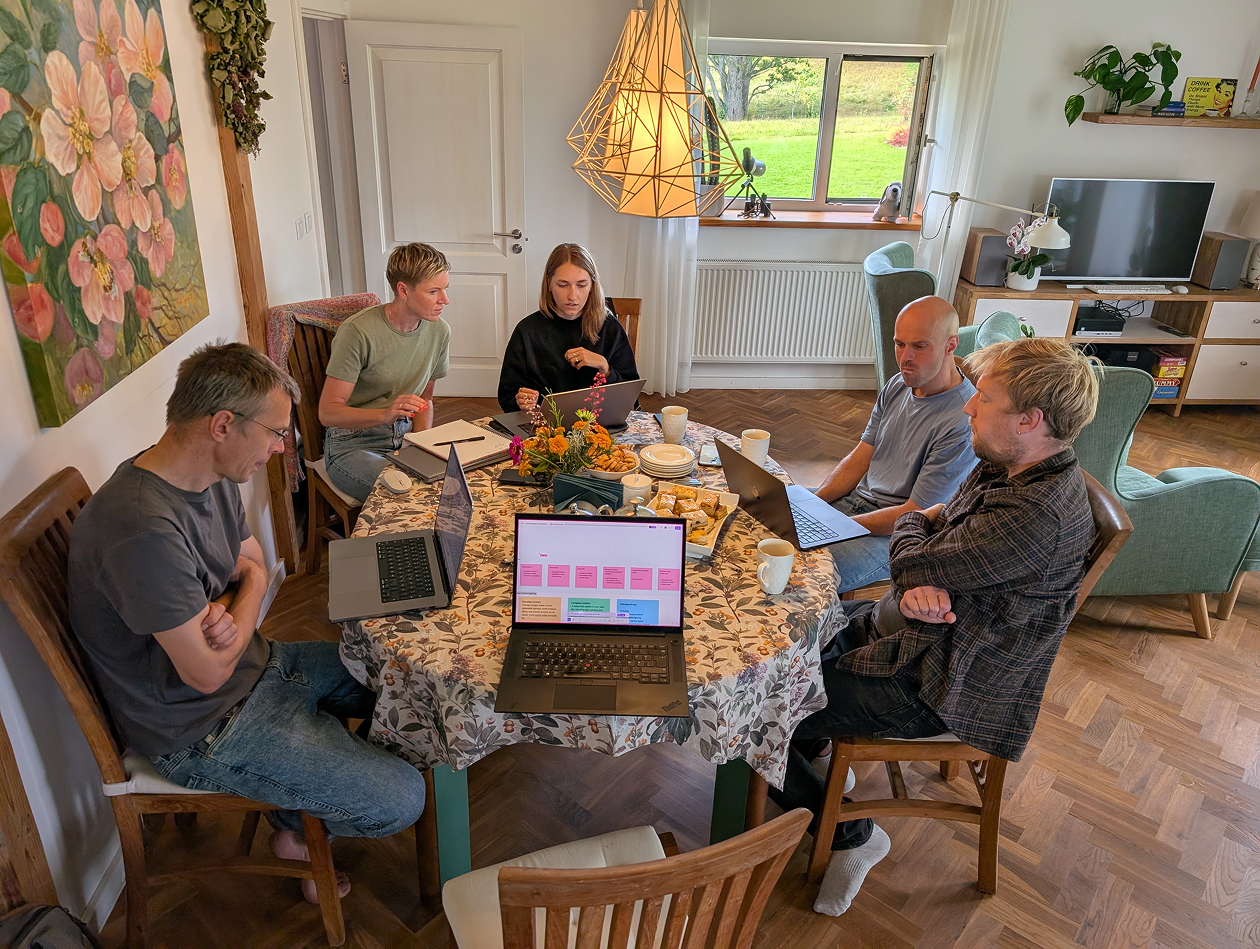
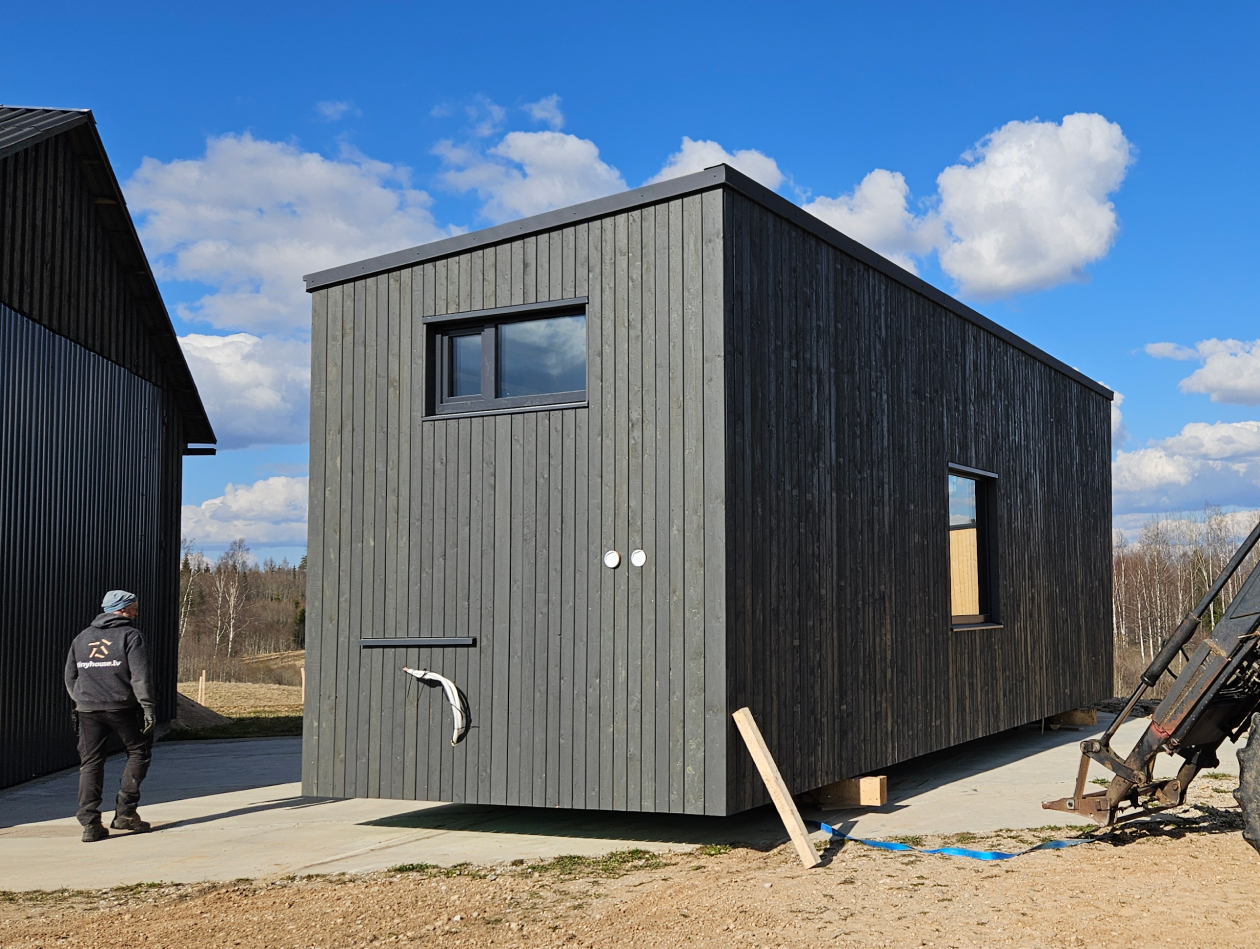
Vecmeiri finished the demo house at their factory in Latvia and installed the pre-programmed smart kits. For the first time, the whole system ran in a real tiny house. We then opened the doors for a demo day, where future buyers, builders and partners could walk through the house, try the switches and the app, and share feedback on what to improve.
A smart house needs far more wiring than a standard one, but every hole made in the walls lets heat escape. Vecmeiri solved this by adding a separate channel for cables just behind the inner wall, so the wiring never cuts through the insulation layer and the house stays warm and energy efficient.
Conduit volume grew by 300% and the standard micro fuse box had to become a full distribution panel for relays and gateways. The panel was redesigned to keep the same exterior footprint, so the house layout did not change.
Once the interior lining is on, changes are costly. So the builders spent three times longer placing and labelling cables carefully, and both teams checked every cable route together on site while the frame was still open.
The result is a complete, standardised smart home package that a buyer can pick as easily as a car, and a builder can install without custom engineering.
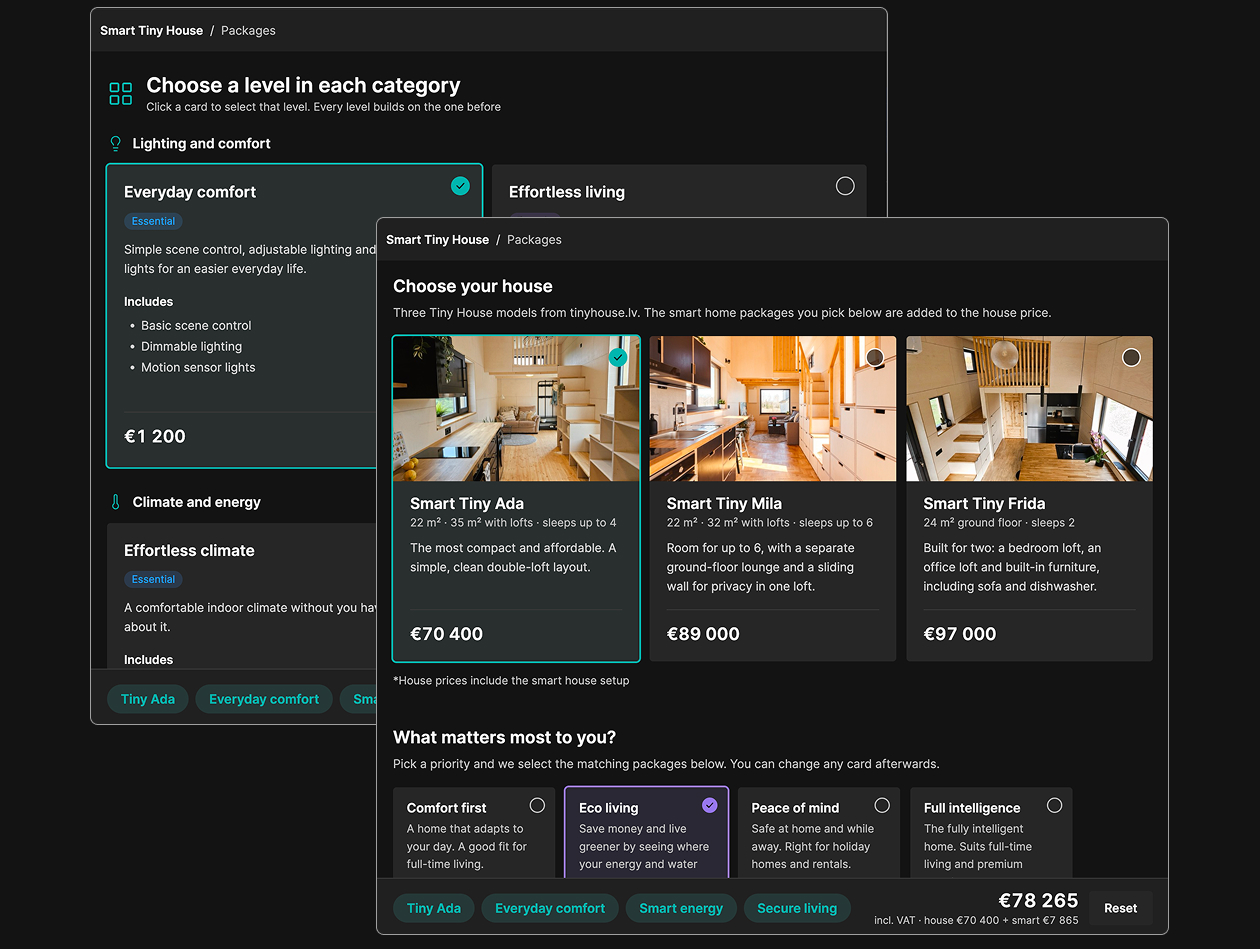
Buyers choose one of Vecmeiri tiny house models and then a level in three categories: Lighting and comfort, Climate and energy, and Safety. Each category has different levels of smart technology that help buyers choose based on their priorities. The price is added to the house price, and everything arrives pre-programmed and tested.
KNX hardware controls lighting, heating, ventilation, the boiler, shutters and sensors from a single system. They are connected directly to each other, so everything in the house keeps working even without internet. Only the remote features that run through the Home Assistant cloud, pause until the connection is back.
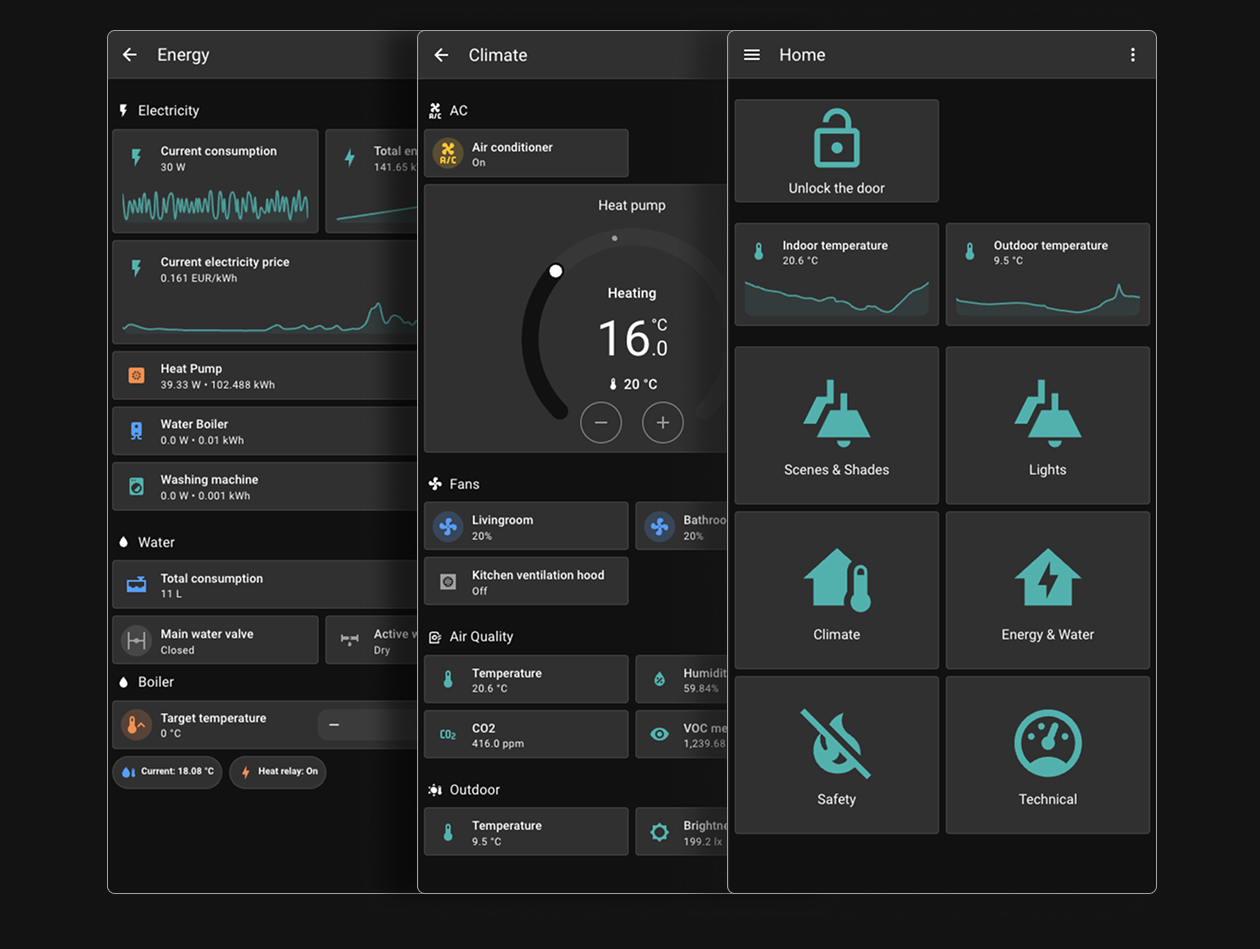
Owners use the Home Assistant mobile app to control lights, climate and safety, see energy and water use, and get alerts from anywhere. Every house gets its own private, protected connection to the cloud, so no one else can get in. When a new house leaves the factory, its connection is set up automatically, and our own planning tool keeps track of every device in the house.
The digital wiring guide, the isolated communications frame and the upscaled central panel are now standard Vecmeiri methods. Together with the installation manuals, they let any housing factory add smart features without changing its basic timber frame.
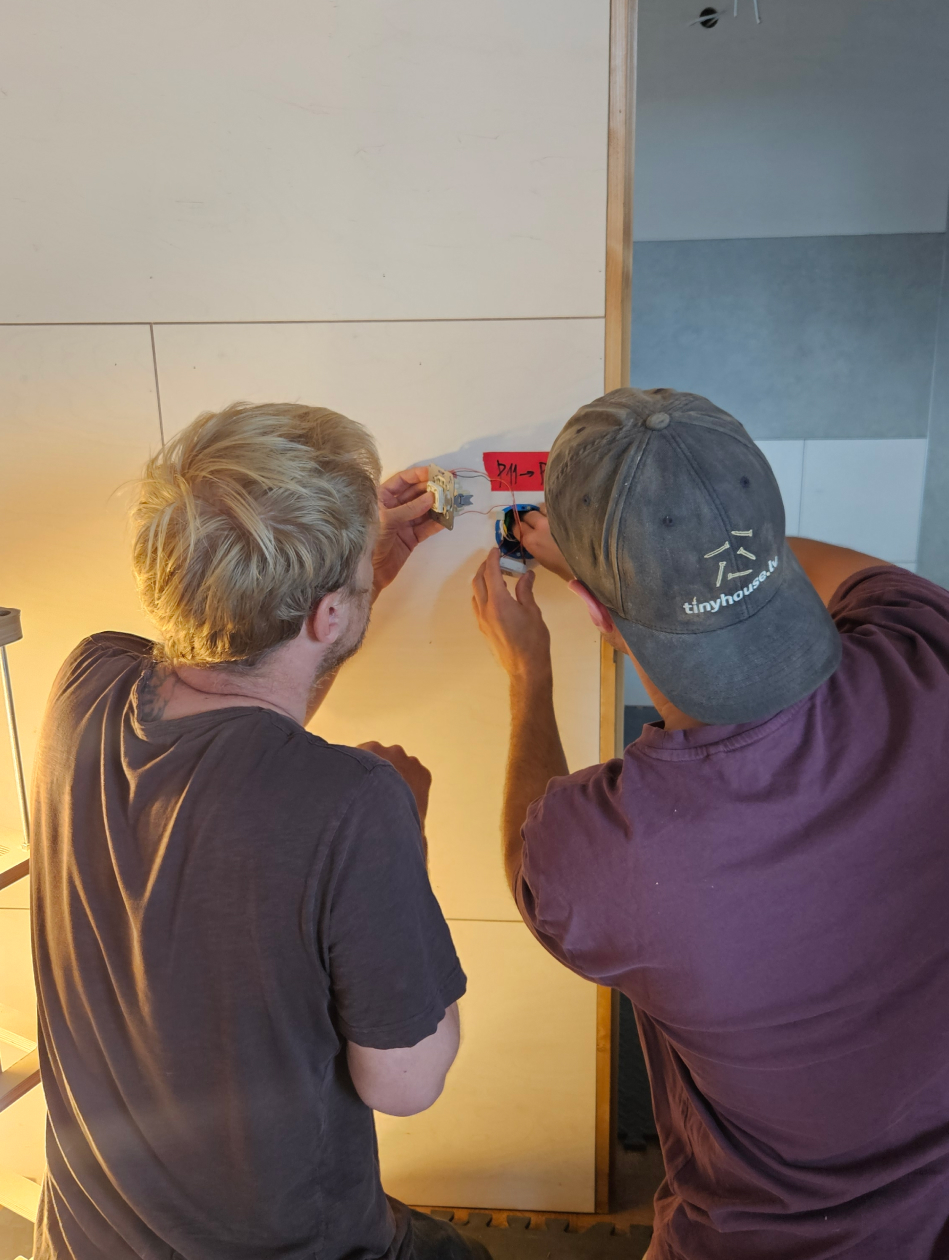

During the project, Vecmeiri built a full demo house at their factory in Latvia. It lets us see the smart functions in a real tiny house, test how they work in the actual space, and gather feedback from users, builders and future buyers before the packages go to market.
Mobi Lab offers smart home structural integration consulting to construction companies on early risk review, factory installation workflows and on-site hardware-readiness audits. The Tartu lab remains in use for pre-programming kits and remote troubleshooting.
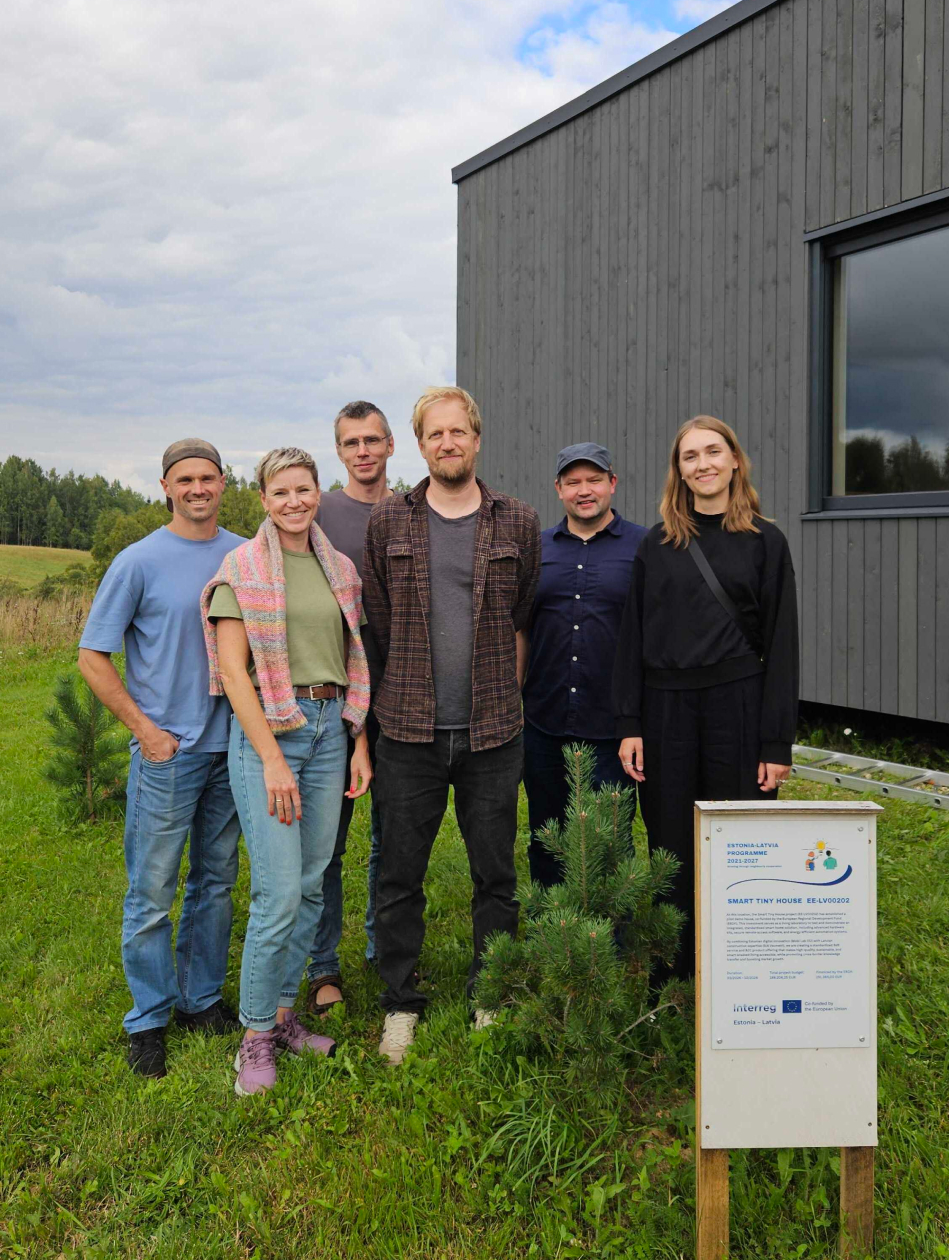
Smart Tiny House shows that a smart home does not have to be bespoke, expensive or fragile. By designing the software, hardware and construction method together, Mobi Lab and Vecmeiri turned a custom project into a product — pre-priced packages, pre-tested hardware and a building process that keeps the house efficient.
Whether you build tiny houses, modular homes or other compact living spaces, we can help you add smart features without reinventing your building process. From early planning and installation guides to a ready cloud platform and mobile app, we take care of the technology so you can focus on building great homes.